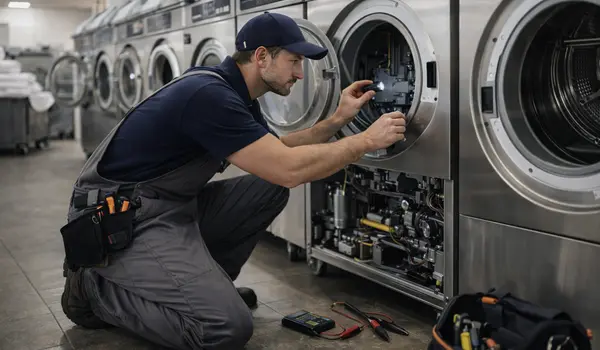
Business Name: APPLIANCE REPAIR OMAHA
Address: 2120 S 72nd St, Omaha, NE 68124
Phone: (531) 201-5281
A dryer that runs but leaves clothes cold, damp, or half-dry puts a real choice in front of you: pause laundry while you investigate, arrange Dryer Repair, or replace the machine. Appliance Repair Omaha can diagnose whether a worn belt, failed heating element, blocked vent path, or control board fault is behind the symptom. Diagnosis takes time, but it can separate a contained component repair from a larger failure before you move a heavy appliance or buy another one. You can also see everything we do.
Trying a basic check yourself may save a service visit if the lint screen, breaker, or exterior vent flap is the issue. It also carries disruption: removing panels without testing can miss a thermostat problem or damage a door seal. Replacement avoids waiting for a part, yet may involve delivery scheduling, electrical connections, and disposal. A repair assessment gives you the condition of the drum, belt, wiring, and heat system to weigh against those practical costs.
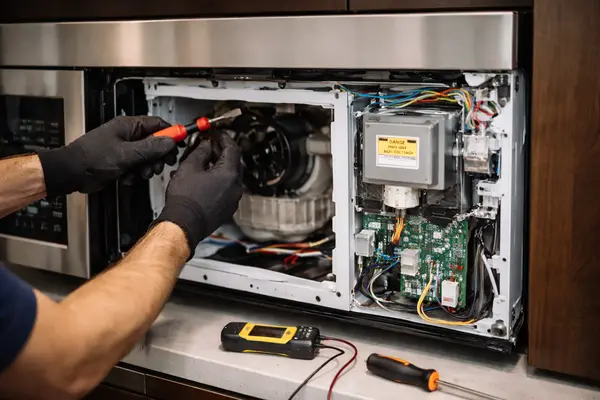
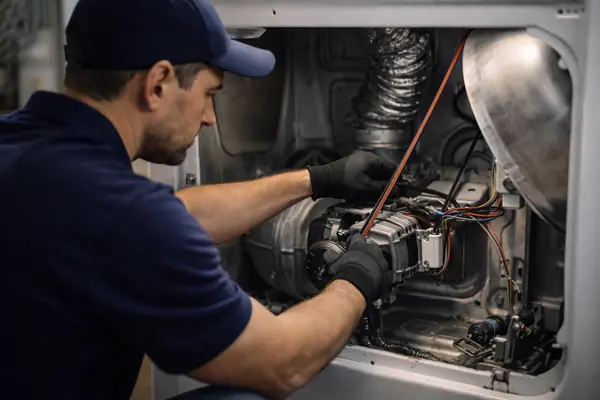
Over the next few loads, clothes should dry in their usual cycle length, the drum should turn smoothly, and the cabinet should not become unusually hot. A faint warm-air smell after heating-element work can be normal briefly as dust burns away. Loud spinning, tripping mid-cycle, repeated error codes, or a dryer that is still not heating deserve a call back, because they can point to airflow, wiring, or thermostat conditions beyond the original failed part. Learn more about our expert Dishwasher Repair services.
Keep the lint screen clear after every load and check the outdoor vent hood every few weeks, especially during Omaha winters. Restricted airflow makes a heating element run longer and raises cabinet temperature. For condenser or heat-pump models, empty the water container and keep drain lines free if the unit shows not draining or leaking. Dishwasher Repair may address similar drainage symptoms, but a dryer’s moisture path and filter arrangement need their own routine attention.
The visit typically starts with the symptom: a no-heat cycle, a squealing drum, an error code, or a breaker that trips. The technician checks power at the outlet, airflow at the vent, and the model’s stored faults before opening the cabinet. Reading error codes and continuity testing help distinguish a broken heating element from an open thermostat, worn belt, defective door switch, or control board issue. That testing matters because several faults can produce the same damp-load result. Learn more about our expert Oven Repair services.
After the source is identified, access panels are removed so the relevant component can be inspected and replaced. Work may include belt installation, seal replacement around a door, clearing drain lines on a condenser dryer, or checking connectors at the control board. The machine is then reassembled, run through calibration where the model supports it, and tested for heat, drum movement, and airflow. Oven Repair follows different temperature and igniter checks, even where some diagnostic tools overlap.
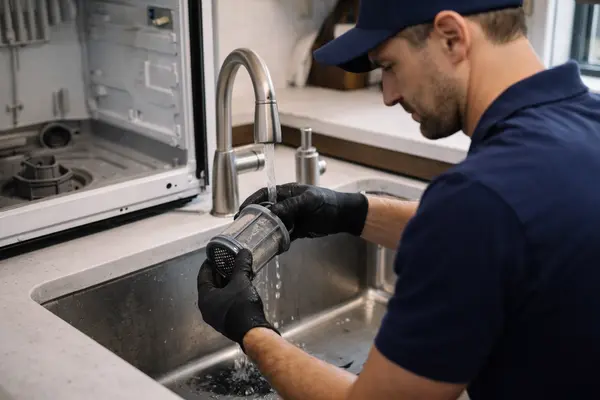
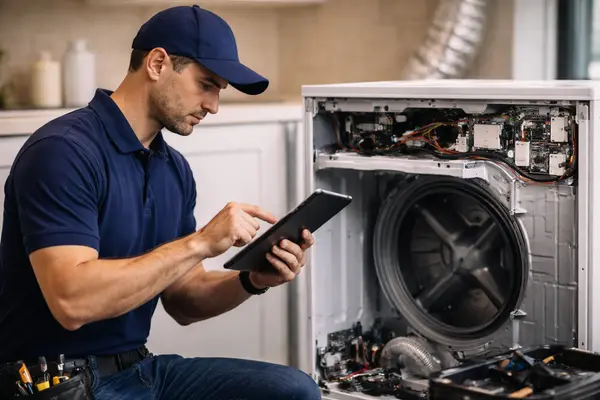
A stopped dryer can be a short visit if a loose belt, blocked lint duct, or failed door switch is visible and the needed part is available. The timeline changes if the drum must be lifted out, the heating element housing is corroded, or a control board requires ordering. Previous attempts matter too: stripped panel screws, mixed wiring connectors, or an incorrectly fitted thermostat can add inspection and reassembly time because each connection must be verified safely.
Machine type and installation shape the work as much as the symptom. A stacked unit in a tight laundry closet may need careful access around the vent elbow, while a condenser model can require cleaning its pump area and drain hose. A noise heard only under a full towel load may expose worn drum rollers rather than a belt during testing. Once those conditions are checked, the expected parts, steps, and timeframe are easier to understand.
APPLIANCE REPAIR OMAHA
2120 S 72nd St, Omaha, NE 68124
(531) 201-5281
Hours of Operation
Open 24 Hours